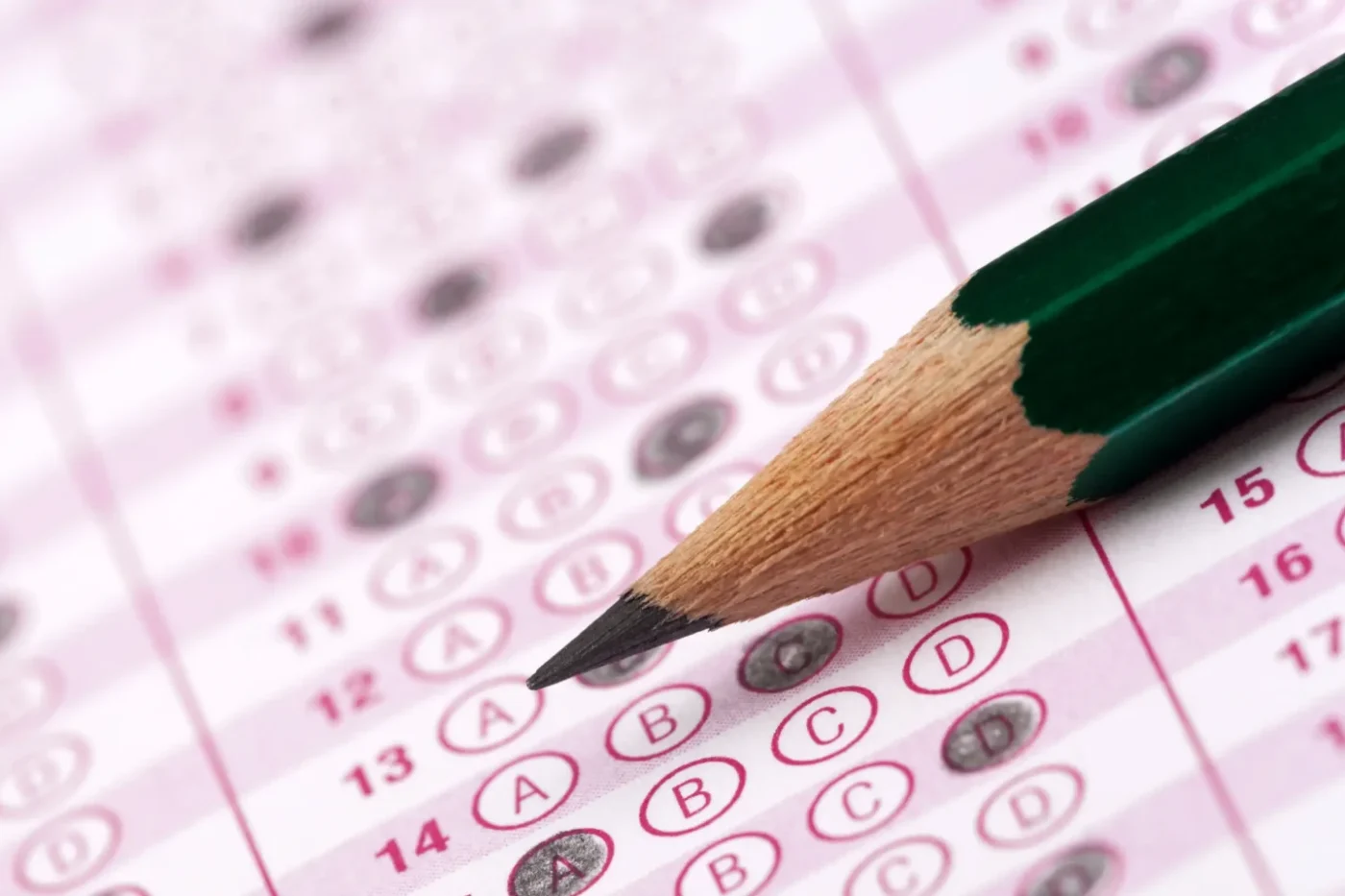
The Multistate Bar Examination (MBE®) is a standardized exam consisting of 200 multiple-choice questions that assess a candidate’s ability to apply fundamental legal principles and reasoning in legal practice. It is a key component of the bar exam in every U.S. jurisdiction except Puerto Rico and Louisiana.
What Is the MBE® Bar Exam?
The National Conference of Bar Examiners (NCBE®) administers the MBE, which prospective attorneys must pass to practice law in most U.S. jurisdictions. In states that use the Uniform Bar Examination (UBE®), the MBE accounts for 50% of the total score.1
Historically, each state had a unique bar exam, making it difficult for lawyers to become licensed in multiple states. To address this issue, the National Conference of Bar Examiners (NCBE®) developed a standardized bar exam known as the UBE, which is uniformly administered, graded, and scored. The UBE was first administered in 2011 in Missouri and North Dakota and has since been adopted by 42 of the 56 U.S. jurisdictions.2
The UBE consists of 3 components: the MBE, the Multistate Essay Examination (MEE®), and the Multistate Performance Test (MPT®).3,4,5 While not all non-UBE jurisdictions administer the MPT or MEE, 54 of 56 jurisdictions administer the MBE as part of their bar exam.

Why the MBE Matters?
In most U.S. jurisdictions, the MBE accounts for 50% of a candidate’s total bar exam score, although there may be variations in non-UBE jurisdictions.1 Aside from the MBE’s importance to the aspiring legal professional, it also functions to:
- Standardize Legal Knowledge: Despite variations in law among jurisdictions, the MBE ensures that bar candidates have a fundamental understanding of the law’s universal core concepts.
- Streamline Score Portability: Since the MBE is standardized, successful examinees can more easily become licensed in participating jurisdictions.
- Foster Fairness: Graders score the MEE and MPT. While they do their best, achieving 100% objectivity is impossible. In contrast, the MBE’s multiple-choice format means that answers are either correct or incorrect, introducing a level of objectivity.
While most non-UBE jurisdictions also weigh the MBE at 50%, some do not. MBE weights for non-UBE jurisdictions are:
| Non-UBE Jurisdictions that administer the MBE | MBE % weight |
|---|---|
| Nevada | 33% |
| Delaware | 40% |
| Mississippi | |
| Virginia | |
| California | 50% |
| Florida | |
| Georgia | |
| Hawaii | |
| Wisconsin | |
| Guam | |
| Northern Mariana Islands |
*South Dakota and Palau do not combine MBE scores with written component scores.3

MBE Eligibility, Registration, and Fees
Each jurisdiction has its own registration process, eligibility requirements, and fees. Bar exam costs can range from $2,000 to over $7,000, including registration, character assessments, and bar prep courses.6 To find specific details, visit your jurisdiction’s Supreme Court or Board of Bar Examiners website.
Most jurisdictions require candidates to:
- Graduate from a law school accredited by the American Bar Association (ABA).
- Pass a character and fitness investigation.
How to Apply for the MBE?
You must apply to take your jurisdiction’s bar exam to sit for the MBE. Select your state from the NCBE’s interactive map for more details.1 Most candidates will have to:
- Create an NCBE account to receive an NCBE number.7
- Review jurisdiction-specific instructions.
- Submit required documents and fees by the deadline.
MBE Format, Subjects, and Sample Questions
Jurisdictions administer MBE questions developed by the NCBE. Test yourself with our free MBE practice questions to get an idea of their content, format, and difficulty.
MBE Format
Examinees will answer 200 multiple-choice questions evenly divided between 2 3-hour sessions on the 2nd day of the UBE. Each of the 7 MBE subjects contains 25 questions, along with an additional 25 unscored pilot questions for future exams.1 The pilot questions are indistinguishable from graded questions, so it is important to approach every question seriously.
MBE Tested Subjects
Below is an overview of MBE subjects. For a more detailed outline, refer to the official NCBE subject matter outline, and then check out our summaries of each MBE subject.
- Jurisdiction and venue
- Law applied by federal courts
- Pretrial procedures
- Jury trials
- Motions
- Verdicts and judgments
- Appealability and review
- The nature of judicial review
- The separation of powers
- The relation of nation and states in a federal system
- Individual rights
- Formation of contracts
- Defenses to enforceability
- Contract content and meaning
- Performance, breach, and discharge
- Remedies
- Third-party rights
- Homicide
- Other crimes
- Inchoate crimes; parties
- General principles
- Constitutional protection of accused persons
- Presentation of evidence
- Relevancy and reasons for excluding relevant evidence
- Privileges and other policy exclusions
- Writings, recordings, and photographs
- Hearsay and circumstances of its admissibility
- Ownership of real property
- Rights in real property
- Real estate contracts
- Mortgages/security devices
- Titles
- Intentional torts
- Negligence
- Strict liability and product liability
- Other torts
MBE Scoring and Difficulty
MBE questions are uniform for each administration, but minimum passing scores range from 130 to 143, depending on the jurisdiction.8 The MBE score you receive does not reflect the number of questions you answered correctly. Instead, it has been scaled using a statistical method known as equating to ensure fairness among different exam versions.
For example, if the July exam is more difficult than the February exam, final scores are calibrated to assist those who took the more challenging exam. MBE mean scaled scores have remained relatively stable over the past few years, hovering around 140.
MBE Study Tips and Resources
Quality MBE study guides offer a deep dive into study tips and resources that help you. Additional tips for how to study for the MBE include:
- Develop effective study skills and learn about test-taking strategies.
- Make the most of the final week before the exam so you’re prepared on exam day.
- Manage stress and anxiety.
- Optimize your study schedule.
- Memorize blackletter law through features like spaced-repetition flashcards.
- Practice exam-style questions in a format that mirrors the real MBE.
- Simulate the exam’s time constraints, interface, difficulty, and content to ensure a realistic experience.
- Keep your notes organized and unique to your learning style (visuals are a huge plus).
- Study important MBE content from anywhere through an MBE mobile app.
Frequently Asked Questions
Is the MBE the same as the UBE?
No. The Uniform Bar Examination (UBE) is a standardized bar exam adopted by the majority of U.S. jurisdictions. The MBE is 1 of its 3 components:
- Multistate Bar Examination (MBE)
- Multistate Essay Examination (MEE)
- Multistate Performance Test (MPT)
What are the Multistate Bar Exam states?
How does the MBE fit into the bar exam?
Can I pass the bar exam by just taking the MBE?
Where do you take the MBE?
When does the NextGen bar exam start?
The NCBE will begin administering the NextGen uniform bar exam in a limited number of jurisdictions during the July 2026 exam window, with additional jurisdictions adding in 2027 or 2028.
References
- National Conference of Bar Examiners. (n.d.). Multistate Bar Examination (MBE®). Retrieved from https://www.ncbex.org/exams/mbe/
- National Conference of Bar Examiners. (n.d.). About the Uniform Bar Examination (UBE®). Retrieved from https://www.ncbex.org/exams/ube/about-ube
- UWorld Legal. (n.d.). About the bar exam. Retrieved from https://legal.uworld.com/bar-exam/about-the-bar-exam/
- UWorld Legal. (n.d.). About the Multistate Essay Examination (MEE®). Retrieved from https://legal.uworld.com/bar-exam/about-the-mee/
- UWorld Legal. (n.d.). About the Multistate Performance Test (MPT®). Retrieved from https://legal.uworld.com/bar-exam/about-the-mpt/
- StateRequirement. (n.d.). Bar exam cost by state. Retrieved from https://staterequirement.com/what-is-the-bar-exam/bar-exam-cost/
- National Conference of Bar Examiners. (n.d.). NCBE account login. Retrieved from https://auth.ncbex.org/login
- Missouri Board of Law Examiners. (n.d.). Bar exam PDF document. Retrieved from https://www.mble.org/getpdfform.action?id=51